
Techwave

Author name: default

Samsung’s New Predictable Sparse Attention Technique: Pioneering AI Innovation

Introduction Samsung Electronics, a trailblazer in technological advancements, has once again demonstrated its commitment to pushing the boundaries of artificial intelligence (AI) with the introduction of its groundbreaking Predictable Sparse Attention Technique. This innovative approach is poised to revolutionize the field of AI and machine learning by addressing one of the fundamental challenges: improving the […]

Samsung’s New Predictable Sparse Attention Technique: Pioneering AI Innovation Read More »
 Self-Supervised Accent Education: Helping Under-Resourced Accents Close the Gap Using Native Language Information

introductory The vast tapestry of accents, dialects, and regional subtleties that make up language is quite remarkable. While research on speech recognition and natural language processing (NLP) frequently focuses heavily on major languages, accents and dialects with limited resources are sometimes disregarded. But developments in self-supervised learning are altering the rules. In this paper, we

 Self-Supervised Accent Education: Helping Under-Resourced Accents Close the Gap Using Native Language Information Read More »

Spatial and Temporal Information Bridging via Short-Term Memory Convolutions

introductory Finding more effective and economical architectures is a never-ending task in the rapidly changing fields of deep learning and neural networks. Innovative methods for improving the performance of various activities, like as image identification and natural language processing, are always being investigated by researchers and engineers. The idea of Short-Term Memory Convolutions (STMC) is

Spatial and Temporal Information Bridging via Short-Term Memory Convolutions Read More »

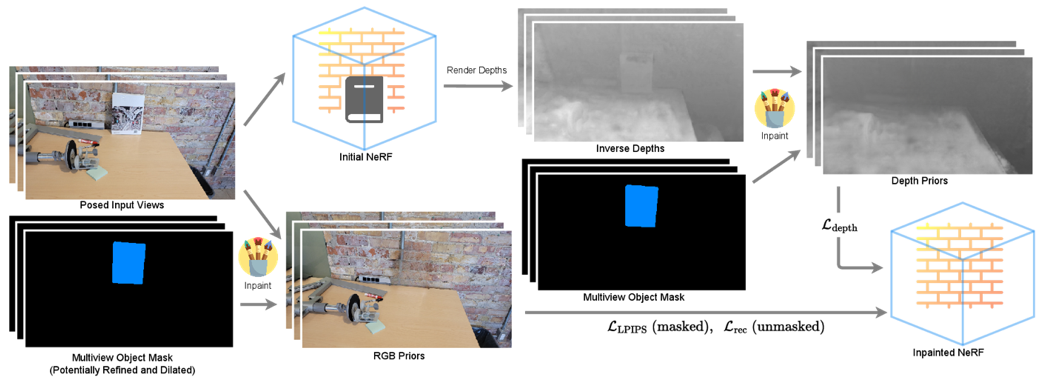
 [CVPR 2023 Series #1] SPIn-NeRF: Bridging the Gap with Multiview Segmentation and Perceptual Inpainting Using Neural Radiance Fields

Introduction Welcome to the CVPR 2023 Series, where we embark on a journey through the latest breakthroughs in computer vision and pattern recognition. Our first stop is the captivating world of SPIn-NeRF – a groundbreaking technology that combines Multiview Segmentation and Perceptual Inpainting through the lens of Neural Radiance Fields. Join us as we unravel

 [CVPR 2023 Series #1] SPIn-NeRF: Bridging the Gap with Multiview Segmentation and Perceptual Inpainting Using Neural Radiance Fields Read More »

 II (CVPR 2023 Series) StepFormer: Automating Video Learning through Self-supervised Localization and Step Discovery

introductory In the domains of self-supervised learning and video-based learning, the Computer Vision and Pattern Recognition (CVPR) 2023 conference remains a hub for cutting-edge research and invention. We delve further into StepFormer, an incredible advancement, in this episode of the CVPR 2023 Series. This cutting-edge technology has the potential to revolutionize the field of education

 II (CVPR 2023 Series) StepFormer: Automating Video Learning through Self-supervised Localization and Step Discovery Read More »

 Task Generalizable Spatial and Texture Aware Image Downsizing Network

Introduction In the world of image processing and computer vision, the task of image downsizing, also referred to as image scaling or resizing, is of paramount importance. Whether the goal is to enhance the efficiency of image-based applications, reduce storage space, or optimize bandwidth usage, the ability to downsize images without compromising their visual quality

 Task Generalizable Spatial and Texture Aware Image Downsizing Network Read More »

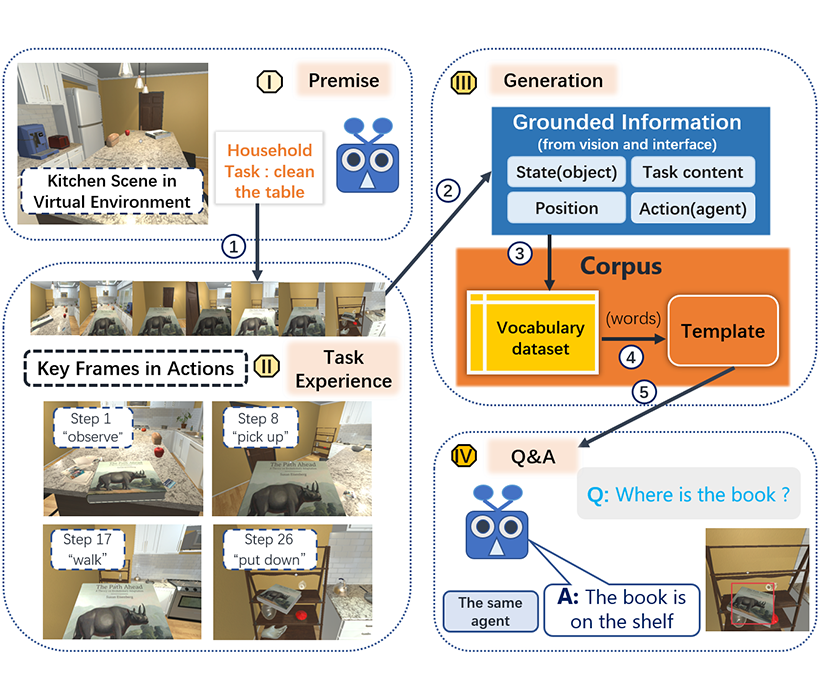
Task-Driven and Experience-Based Question Answering Corpus for In-Home Robot Application in the House3D Virtual Environment

Introduction The intersection of in-home robots and artificial intelligence (AI) has led to exciting advancements in the development of household assistant robots designed to assist with various tasks. A key challenge for these robots is understanding and responding to natural language queries from users effectively. In this article, we will explore the creation of a

Task-Driven and Experience-Based Question Answering Corpus for In-Home Robot Application in the House3D Virtual Environment Read More »

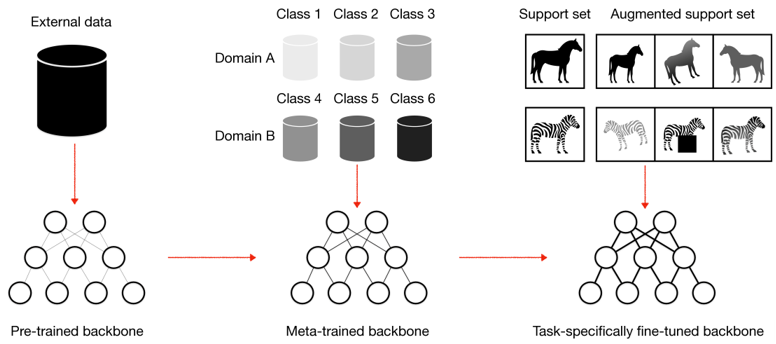
 The Pre-Training, Meta-Training, and Fine-Tuning Pipeline for Few-Shot Learning

Introduction Few-shot learning, a challenging subfield of machine learning, addresses the formidable task of training models to make accurate predictions when provided with very limited data. This scenario is particularly pertinent in cases where acquiring extensive training data is impractical or cost-prohibitive. Over recent years, a robust pipeline encompassing pre-training, meta-training, and fine-tuning has emerged

 The Pre-Training, Meta-Training, and Fine-Tuning Pipeline for Few-Shot Learning Read More »

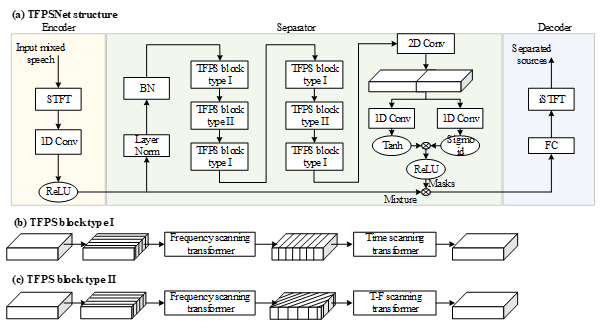
TFPSNet: Time-Frequency Domain Path Scanning Network for Speech Separation

Introduction In the intricate realm of speech separation, where the goal is to untangle overlapping speech signals in acoustic mixtures, traditional signal processing techniques often face significant challenges. The advent of deep learning, however, has ushered in a new era of innovative approaches, and one standout in this field is TFPSNet, which stands for Time-Frequency

TFPSNet: Time-Frequency Domain Path Scanning Network for Speech Separation Read More »

 Using Sound to Add Scale to Computer Vision

Introduction In the realm of computer vision, where machines are trained to interpret and understand visual data, a fundamental challenge has persisted—the ability to perceive scale accurately. While computer vision has made tremendous strides in object recognition and scene understanding, estimating scale, especially in scenarios lacking reference points, remains a significant obstacle. To address this

 Using Sound to Add Scale to Computer Vision Read More »

Scroll to Top