Techwave

Author name: default

FedMargin: Pioneering Federated Learning through Attentive Margin of Semantic Feature Representations

Introduction In the rapidly evolving landscape of machine learning and artificial intelligence, federated learning has emerged as a groundbreaking approach to collaborative model training. It enables multiple devices or parties to collaboratively train a shared machine learning model while keeping their data decentralized and private. One of the most recent innovations in federated learning is […]
FedMargin: Pioneering Federated Learning through Attentive Margin of Semantic Feature Representations Read More »

 FlowFormer: Revolutionizing Optical Flow with Transformer Architecture

Introduction In the realm of computer vision, the task of optical flow estimation has long been a challenge. It involves tracking the motion of objects in video sequences and is integral to applications such as object tracking, action recognition, and autonomous navigation. Traditional methods for optical flow estimation often grapple with issues like occlusions, motion

 FlowFormer: Revolutionizing Optical Flow with Transformer Architecture Read More »

Gaussian Process Modeling of Approximate Inference Errors for Variational Autoencoders

Introduction In the ever-evolving field of computer vision and machine learning, breakthroughs continue to shape the landscape of AI research. This article delves into an intriguing study presented at the Computer Vision and Pattern Recognition (CVPR) 2022 conference, specifically focusing on the research titled “Gaussian Process Modeling of Approximate Inference Errors for Variational Autoencoders.” This

Gaussian Process Modeling of Approximate Inference Errors for Variational Autoencoders Read More »

Speaker Encoder with Hierarchical Timbre-Cadence for Zero-shot Speech Synthesis

First Off Advances in neural text-to-speech (TTS) models have made it possible to create artificial voices that are more expressive and natural-sounding, which has greatly advanced speech synthesis technology. But it’s still difficult to synthesize speech with a particular speaker’s identity and style, particularly in zero-shot settings where there isn’t much or any training data

Speaker Encoder with Hierarchical Timbre-Cadence for Zero-shot Speech Synthesis Read More »

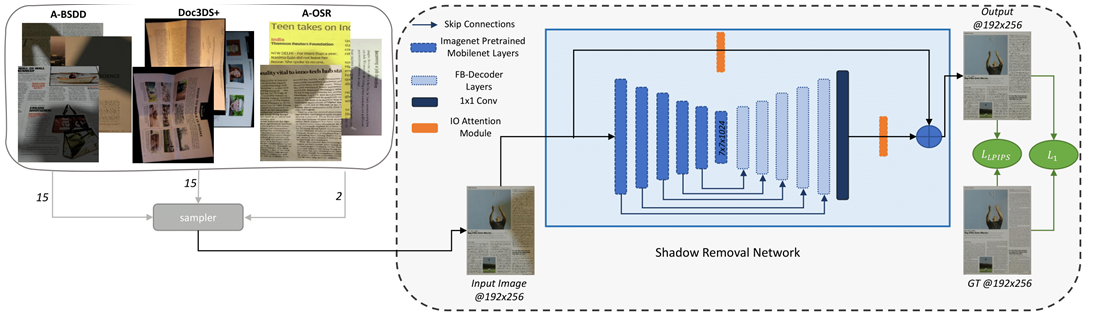
 LP-IOANet: Illuminating the Future of Document Enhancement with Efficient High-Resolution Shadow Removal

Introduction In the realm of document processing and image enhancement, the significance of clear, legible, and high-resolution documents cannot be overstated. However, the presence of shadows in scanned or photographed documents can often pose a significant challenge. Enter LP-IOANet – an innovative solution designed for Efficient High-Resolution Document Shadow Removal. In this article, we will

 LP-IOANet: Illuminating the Future of Document Enhancement with Efficient High-Resolution Shadow Removal Read More »

Mobile Twin Recognition: Advancing Mobile Security and Personalization

Introduction In today’s increasingly mobile-centric world, smartphones have become extensions of ourselves, storing vast amounts of personal data and serving as gateways to our digital lives. Ensuring the security and personalization of these devices is paramount, and a promising technology called Mobile Twin Recognition is emerging as a powerful solution. In this article, we explore

Mobile Twin Recognition: Advancing Mobile Security and Personalization Read More »

 Multi-Stage Progressive Audio Bandwidth Extension: Enhancing Sound Quality Beyond Limits

Introduction In the world of audio signal processing, achieving high-quality sound reproduction is a continuous pursuit. One significant challenge is extending the bandwidth of audio signals to capture richer and more detailed audio experiences. The solution to this challenge is the innovative technique known as Multi-Stage Progressive Audio Bandwidth Extension. In this article, we will

 Multi-Stage Progressive Audio Bandwidth Extension: Enhancing Sound Quality Beyond Limits Read More »

Using Open Custom Keyword Spotting Testsets to Promote Multilingual Communication

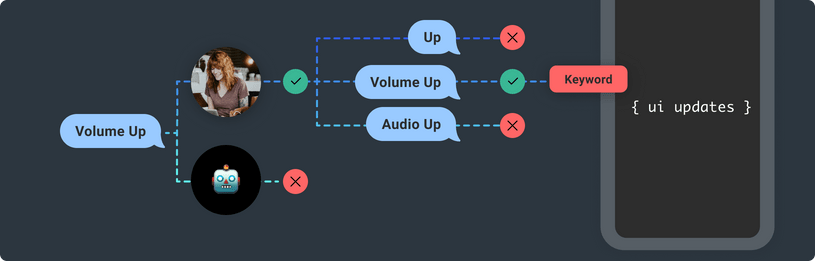
introductory The need for adaptable and efficient multilingual technologies has never been higher in our world of growing interconnectedness. One of the most important parts of these technologies is multilingual keyword spotting, which makes it possible for voice-activated apps and systems to recognize and react to many languages. A key component in the creation and

Using Open Custom Keyword Spotting Testsets to Promote Multilingual Communication Read More »

 Extending NNStreamer: Pipeline Framework and Among-Device AI

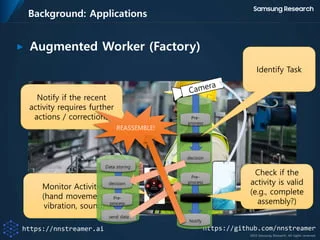
Introduction In the ever-evolving landscape of artificial intelligence (AI) and machine learning (ML), the development of efficient and flexible frameworks is crucial for harnessing the power of neural networks. One such remarkable advancement is the extension of NNStreamer, a versatile framework that facilitates the creation of sophisticated AI pipelines and enables seamless interaction among devices.

 Extending NNStreamer: Pipeline Framework and Among-Device AI Read More »

Enhancing AI Model Robustness with pMCT – Patched Multi-Condition Training

Introduction In the ever-evolving landscape of artificial intelligence (AI), the need for robust and reliable AI models has never been greater. One innovative approach that has gained prominence is pMCT (Patched Multi-Condition Training). pMCT addresses the challenge of ensuring that AI models can perform effectively across a wide range of conditions or scenarios, offering improved

Enhancing AI Model Robustness with pMCT – Patched Multi-Condition Training Read More »

Scroll to Top